
What I look for in a family portrait session
When creating an individual portrait, the focus is on capturing the subject in a way that feels both authentic and visually appealing. Every detail matters—their expression, body language, and how the light interacts with their features. The goal is to balance storytelling with aesthetics: Does this expression feel true to them? Does the pose complement their features and personality? Is the composition strong enough to stand alone as a work of art?
In contrast, a family portrait is less about perfecting each individual and more about celebrating the group as a whole. While every person matters, the focus isn’t on isolating individual personalities—it’s about how they interact and connect with each other. The emphasis is about capturing the overall energy, the balance of the composition, and the subtle ways relationships are expressed. A successful family portrait conveys warmth, connection, and a sense of togetherness—it tells the story of the family as a unit, rather than any one individual.
To clarify what I mean by all this, I’m going to show you two group portraits—one that represents what I aim to avoid in a family portrait, and another that contains all the qualities I strive to capture.
You’ll probably recognize the faces in this first family portrait, so introductions aren’t really necessary. But I want to highlight this example because it perfectly illustrates what I don’t aim for in a family portrait session.
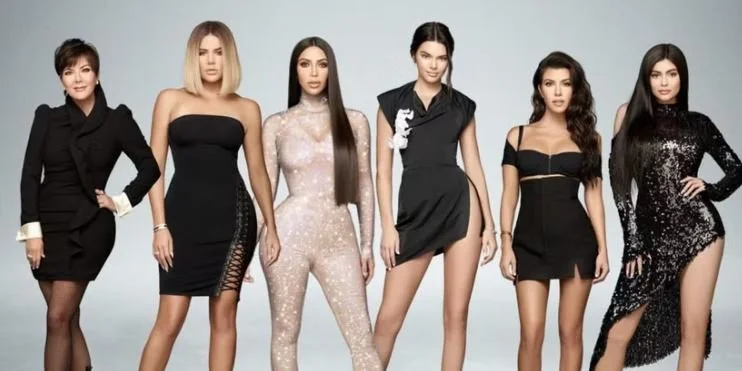
In this group shot, every family member is facing forward, looking straight at the viewer rather than at each other. There’s little connection between them—no shared glances, no interaction—and their neutral expressions and body language don’t reveal much about their individual personalities. Now, to be clear, this isn’t a criticism. It’s likely intentional, designed to present each person as their own distinct brand while keeping the focus evenly distributed. However, this approach is the complete opposite of what I strive for in a family portrait.
What I am looking for
Now, as an example of what I am looking for, let’s take a look at this group portrait. Luncheon of the Boating Party by Renoir was actually one of the key inspirations behind the way I design my own group portraits.

This painting is filled with dynamic interactions that feel incredibly natural—though they were likely carefully composed. It’s not just that there are multiple connections happening; each interaction tells its own small story, all of which weave together into a larger narrative that brings the whole scene to life.
I don’t know who these people are, how they know each other, or exactly what’s happening, yet the painting is rich with storytelling. And if we look closely, we can start to piece things together.
For example, many of the figures seem completely at ease with one another. Their body language is relaxed and informal—take the man in the foreground, casually straddling his chair backward. There’s an energy of warmth and joy in their expressions. Could this be a gathering of close friends? A celebration of some kind? Whatever the occasion, the painting invites us to step into the moment and imagine the stories unfolding within it.
Here’s some speculation on what might be happening between the figures:
Flirtation & Playfulness – The woman in the foreground, leaning on the railing with a small dog in her arms, seems to be the center of attention for the man to her left. He’s gazing at her, perhaps trying to catch her attention, while she seems more absorbed in her own thoughts or the conversation happening elsewhere.
Deep Discussion & Connection – The couple on the left, with the man in a top hat and the woman turned toward him, seem to be in an intimate conversation. Perhaps they’re engaged in a debate, sharing a secret, or even discussing plans beyond the party.
Lighthearted Banter – The group in the middle, with the man in a straw hat, appears to be in a more casual, relaxed chat. He leans back confidently, listening or making a witty remark, while others react with smiles.
Distraction & Observation – Some figures are absorbed in the people around them, while others gaze off into the distance, lost in thought. This gives the painting a sense of spontaneity—like a captured moment rather than a posed scene.
A Sense of Inclusion & Exclusion – There’s an interesting dynamic where some guests are deeply engaged with each other while others are on the periphery, either looking on or disengaged. It mimics real social gatherings where different conversations and relationships unfold simultaneously.
These elements—flirtation, deep conversations, lighthearted moments, and even a touch of solitude—make the painting feel so alive, and represent the types of relationships each person depicted has with other people depicted- much like the best group portraits do.
Interaction & connection in my family portraits
Just like at a lively gathering, family members have their own unique relationships and ways of interacting with one another.
In a family portrait, I aim to capture these connections by telling a story, or even multiple little stories within a single piece. This layered approach to composition is something I’m particularly intentional about when creating large family portraits in Wellington.
Here are a few examples:
Showing siblings leaning closely towards each other to reflect their close relationship
Having a grandparent in the centre of the group looking front on and dignified amongst more spirited, rowdy behaviour from the rest of the family to convey their presence and anchoring role in the group
Having siblings playfully teasing each other while their parents shoot each other a glance in reaction
Showing family roles such as a parent’s arm resting protectively on their child’s shoulder
Crafting the perfect moment
Large family photoshoots aren’t rigidly scripted to create specific reactions. While I do guide interactions to encourage natural moments, I can’t fully predict how the overall story—or the smaller stories between family members—will unfold. Spontaneity plays a big role in the final result.
The best interfamily interactions tend to emerge naturally when people feel at ease in front of the camera. That’s why creating a relaxed atmosphere is so important.
But here’s where things get really exciting…
Unlike pure photography, I’m not limited to a single captured moment. Instead, I can pull together the best expressions of each person—or even smaller groupings from different shots—and seamlessly collage them into one final composition. Since the finished piece is a painted artwork, no one will ever know it was assembled from multiple photographs!
That said, the individual moments chosen aren’t just about looking good on their own. They all need to work together to tell a cohesive story—one that feels as natural and dynamic as if it were captured in a single, perfectly timed moment.
At first glance, this family portrait looks like one seamless moment—but in reality, it was created from four separate photographs:

The two figures on the right were originally captured together, sharing a laugh as they watched the little boy on the far left, who was playfully pretending to be a dinosaur. That moment of connection became the foundation for the piece.
The woman in lilac, positioned at the heart of the portrait, is the mother of the two men beside her. Since this artwork was a gift for her, she was intentionally made the focal point—not just through her placement, but also by dressing her in a distinct color. Her natural warmth and joy shine through in her expression, reflecting her outgoing and lively personality. In contrast, her taller son to her right is a bit more reserved, his posture subtly conveying his quieter nature. Yet, in the presence of family, his walls come down, and his body language reflects that comfort.
On the left, the blonde woman with her arm around her son is actually a blend of two photographs. In one, she was laughing as her son mischievously pulled her hair. But because her expression naturally faced the direction of the others’ laughter, it fit seamlessly into the shared moment. The arm wrapped around her son was taken from another image, yet the body position matched perfectly, making it look as though it was always meant to be.
This mother and son are the newest members of the family unit—the woman is the partner of the man at the center. Their placement within the scene, laughing along with the rest of the family, visually reinforces their place within this tight-knit group.
The man in the center is the only one breaking the pattern by looking straight at us, almost as if he’s drawing us into the moment. There’s a sense that he’s narrating the scene, playing the role of the eldest son who keeps his composure—yet his smirk suggests he’s holding back laughter, unable to resist the joy unfolding around him.
* Stay tuned—I’ll be adding more family portrait examples as soon as I have permission to share a few more pieces!
Want a family portrait of your own? You’ll find everything you need to know on my Family Portraits page.