
How to choose the right size for your family portrait
When it comes to group family portraits, size really does matter—at least when it comes to painted ones. If you're considering commissioning a portrait with four or more people, here’s what you need to know about how we approach sizing, and how to choose the right one for your space.
What Sizes Do We Offer?
For our Impasto Photography family portraits (these are our hybrid photographic/painted portraits), we start at A1 (594 x 841 mm), which is the same size as most posters; and go up from there. While that may sound quite large (especially if you're used to photo print sizes), it's the ideal starting point for group portraits with a painted treatment.
Our Fine Art Oil Family Portraits are a little bit less of an exact science when it comes to sizing (these are our 100% traditional oil painted portraits). Because we need to be totally sure we have enough room to actually paint the details of each face, sizing is a factor that can be confirmed after a photograph selection has been made. We need to make sure that each adult face occupies at least an area of approximately the size just shy of an A4 sheet of paper, a child’s face occupying around 3/4s of an A4, and a babies face taking up just over half of an A4 in area. To give an estimate on sizing, for a family portrait that’s got an arrangement of 4 people across (there can be more people in front or behind) we’re looking at sizes that start at L (1061mm x 1500mm).
Larger sizes are also available if you're after a bolder visual impact, your family unit has lots of members or you’re wanting to include the extended family, or if you simply just have a big space you’d like to liven up.
Our sizes to scale
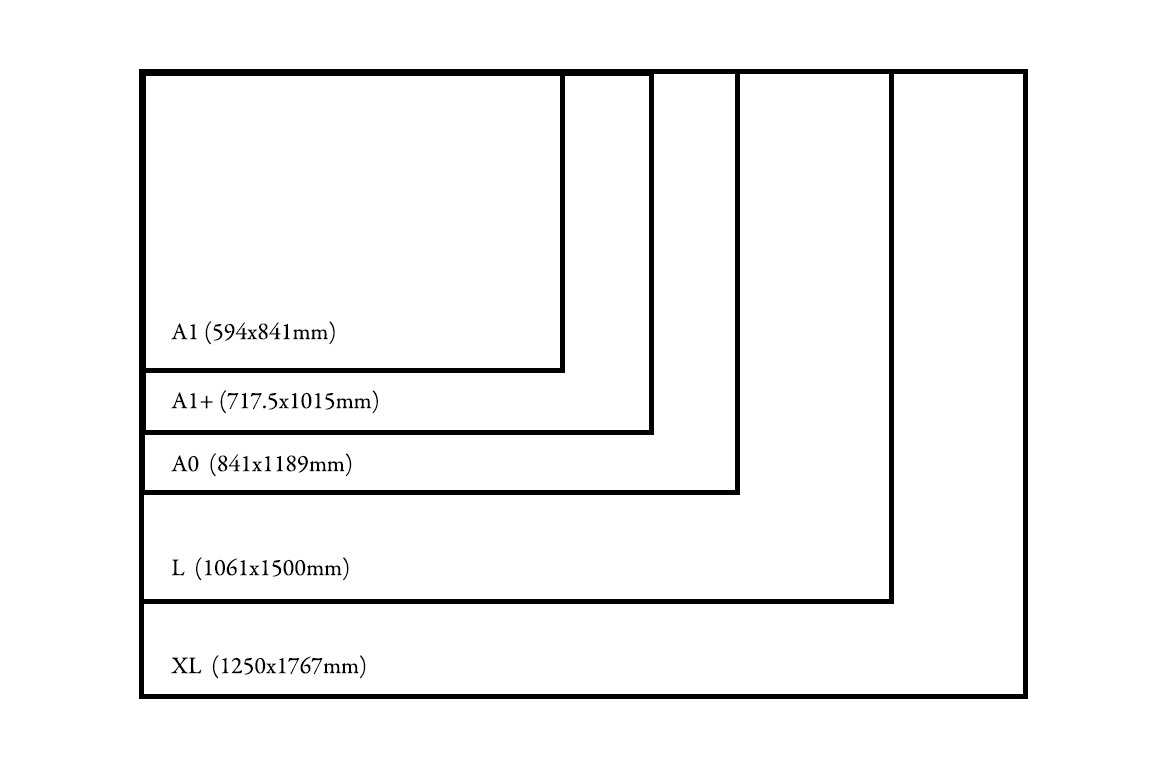
A1 is already quite large. How come this is the minimum size for a family portrait?
Technically, Our Impasto Photography artworks; which consist of a digitally printed base layer, can be produced at sizes smaller than A1. But they just don’t look right.
Why?
Firstly, when the printed details mimicking brushstrokes are much smaller than the size the brushstrokes would be if they were actually painted, the artwork starts to look more like a reproduction of a painting rather than an actual original artwork.
And secondly, we apply oil painted details to our Impasto Photography hybrid photo/painting pieces on top of the printed canvas base layer— so we actually need to be able to maneuver a paintbrush around some of the larger details of the piece in a lively way.
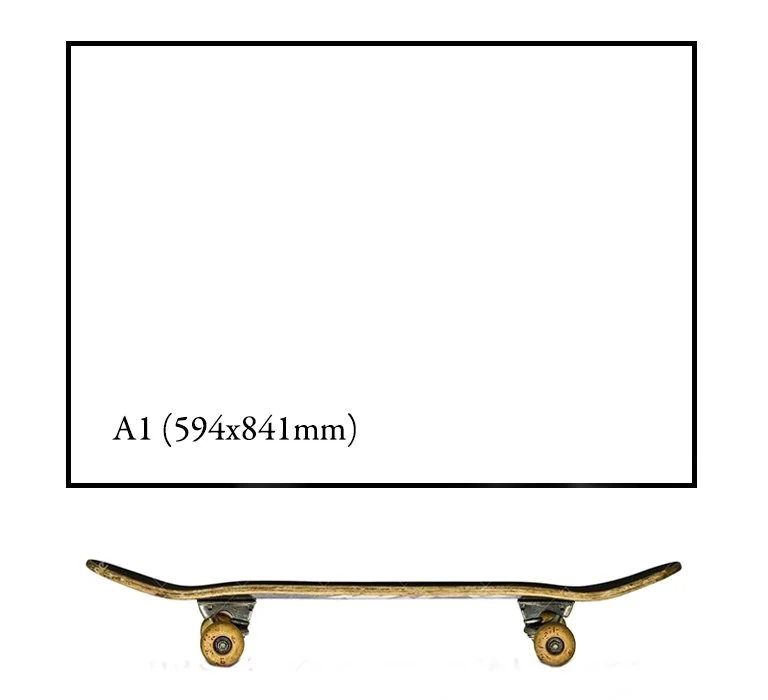
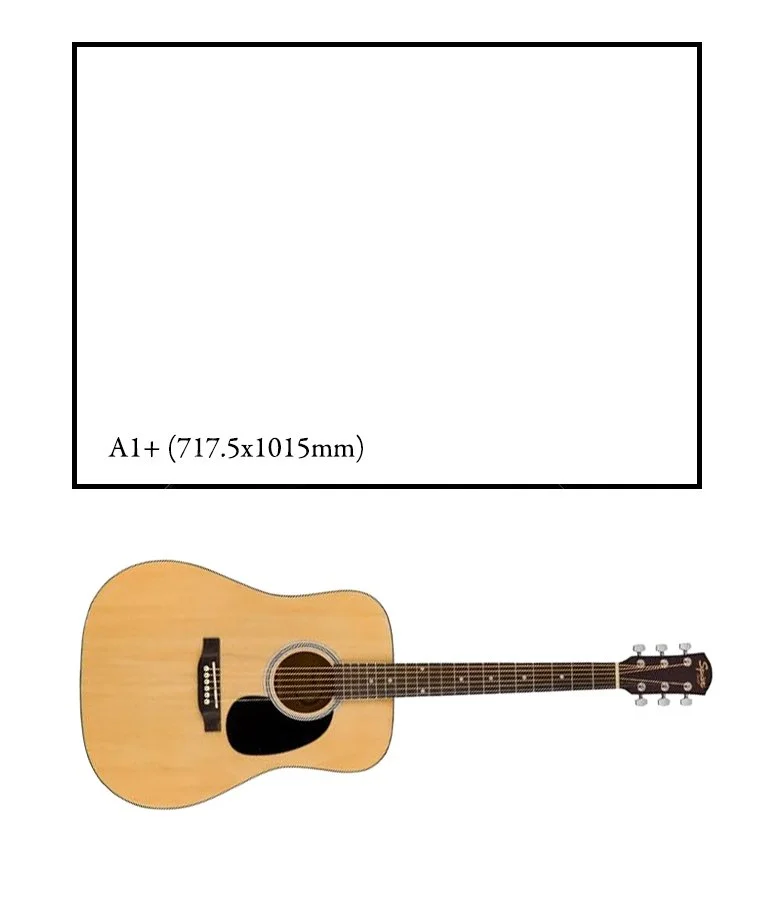
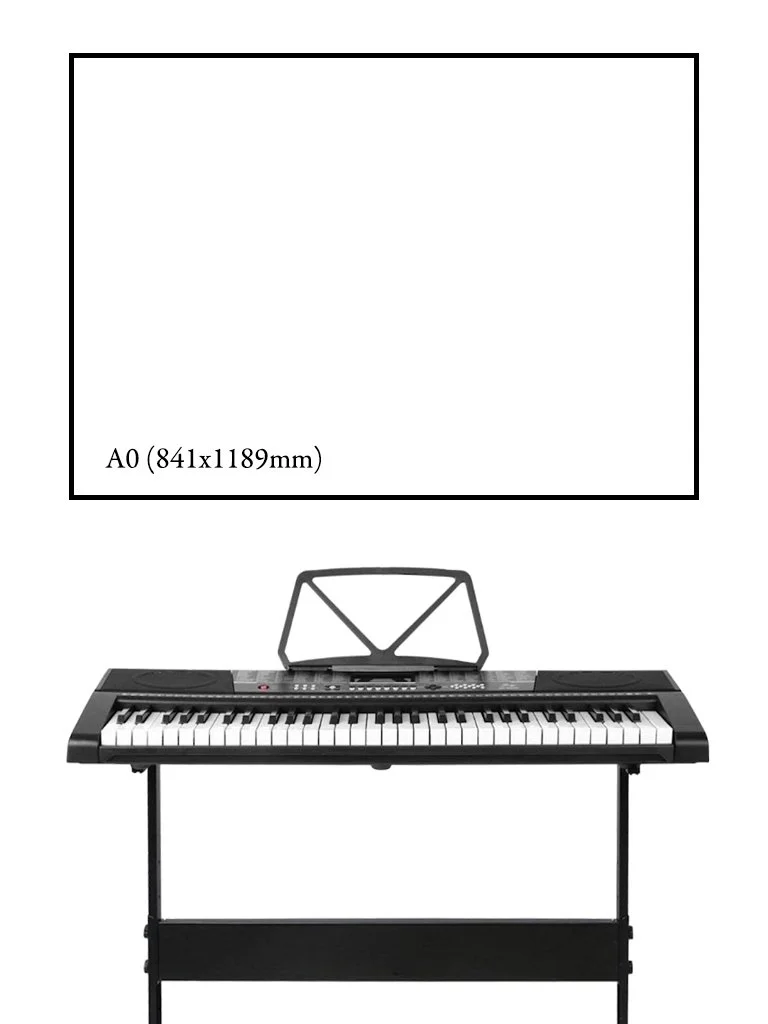
Here’s a size comparison between the family portrait options
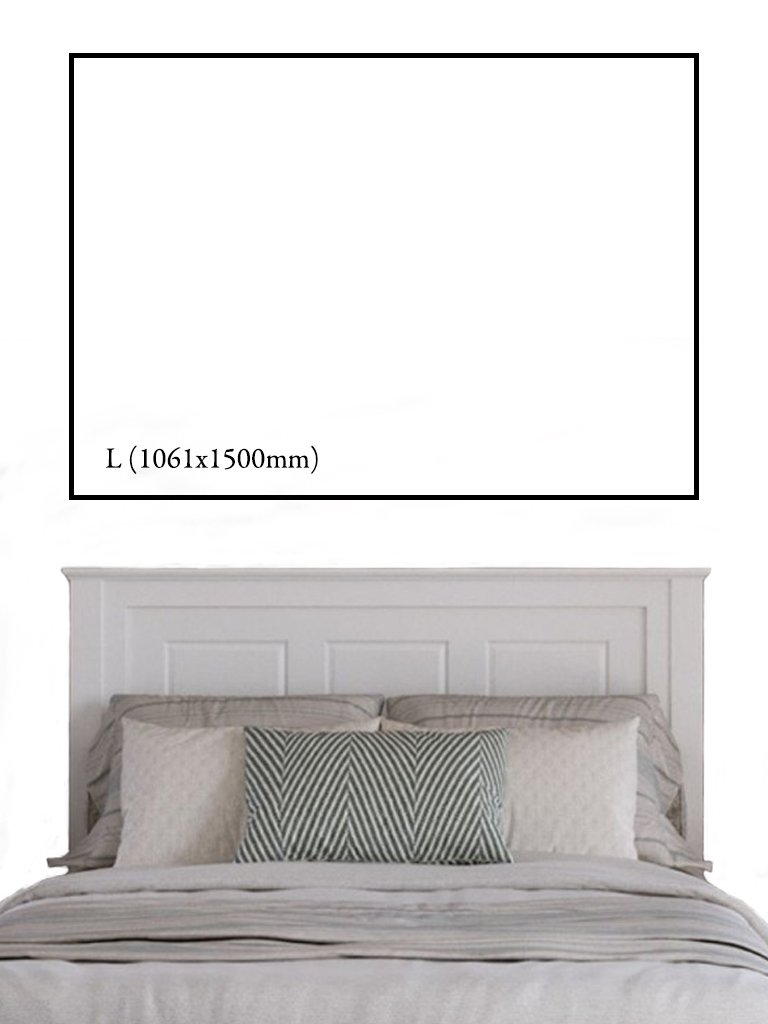
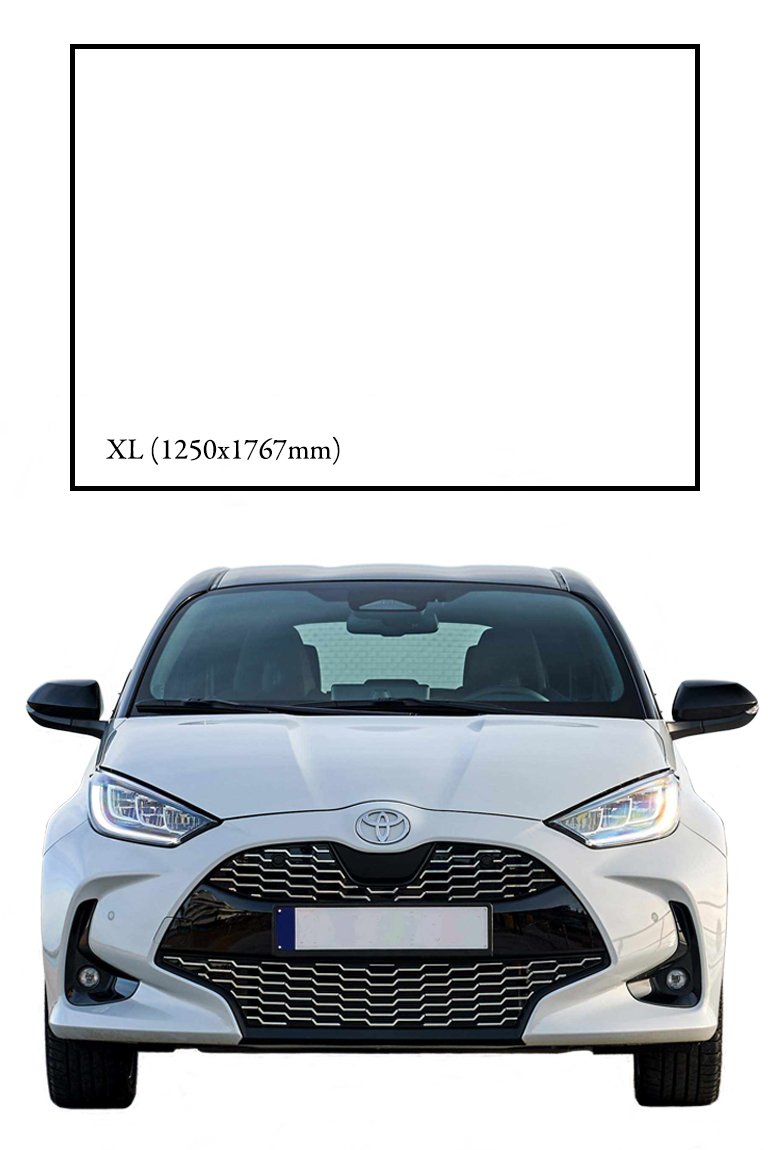
What are some things to think about when choosing a size?
Alright, so by now you’ve probably got a sense of why we need to start a bit bigger than what you might’ve first pictured when it comes to sizing your family portrait.
But the next question is: should you go even bigger than poster (or skateboard) size?
There are a couple of things that can help you figure that out such as where you’re planning to hang it, and what kind of feeling you want the portrait to bring into the space.
Let’s take a closer look at both of those...
1. Consider the Wall Space and Placement
Where your portrait will go is a huge part of the sizing decision.
Some families already know exactly where they want to hang their portrait, such as a spot above the fireplace, in the entryway, or as the focal point of the living room. Others haven’t quite figured it out yet, and that’s fine too. But thinking ahead about placement can help you narrow down what size will feel right in the space.
Here are a few things to keep in mind:
Wall size: A portrait that’s too small for a wall can look a bit lonely. You want the piece to sit comfortably within the space without getting swallowed up by blank walls. As a general guide, the artwork should take up around 60–75% of the available width of the wall space if it’s hanging by itself on a blank wall. The same also applies to a wall-segment such as a larger wall broken up by a large vertical piece of furniture such as a bookcase.
Surrounding furniture: If the portrait will hang above a piece of furniture like a sofa or set of drawers, aim for something that’s at least two-thirds the width of the furniture below it. It keeps things looking intentional and well-proportioned.
Height and viewing distance: Portraits are best viewed at eye level, so consider how far back you’ll be standing when you’re looking at it. A large open room can handle a bigger piece because you’ll be viewing it from further away. Smaller rooms or hallways may feel better with something a bit more contained—though for family portraits of four or more, we’re still talking large-ish sizes regardless.
In short: the right size for your portrait doesn’t just depend on the number of people in it. It also depends on where it’s going to live, and how you want it to live in that space.
2. Think About Emotional Impact
The size you choose doesn’t just affect where the portrait fits; it shapes how it feels, too.
Larger portraits:
A larger portrait has presence. It carries a kind of quiet weight. Without shouting for attention, it still says, this is important. It’s about how much space you’ve chosen to give this moment, this group of people, this connection.
When something is made on a bigger scale, it’s like the emotion behind it gets scaled up too. A larger portrait immerses you in the experience and emotion leaving you feeling like you’re a part of it; not standing separate from it as an observer.
I still remember going to this Rembrandt exhibition (it was actually all reproductions, but printed to the original sizes). I’d seen the same works in books before, but seeing them full scale was something else. There was one painting in particular that totally caught me off guard. I couldn’t stop laughing, partly out of nerves. It honestly felt like I’d just wandered onto an X-Factor stage and the entire group in the painting was loudly judging me. Their expressions were so intense at that size, and the sound of Simon Cowell’s voice telling me I’m “utterly pathetic” immediately came into my mind.
Smaller portraits:
Smaller portraits have their benefits too (though for us, A1 is still the starting point for families). They can feel more personal, almost like a private moment. Because you need to get up close to really take it all in, there's an intimacy to them.
I haven’t had this experience myself, but I think we can all imagine the difference: confessing your sins in front of a small portrait of Jesus versus a massive one. The little one might feel like you’re having a private word with a trusted friend. The big one? That’s more like standing in front of a towering figure who’s definitely seen everything you’ve ever done and isn’t too impressed.
So when you’re deciding on size, it’s not just about what fits where. It’s also worth thinking about what kind of feeling you want the portrait to carry. Do you want it to make a statement? Or feel like a quiet moment someone leans in for? Either way, scale helps set the tone.
Bringing together placement & emotion:
Our family group portraits often feature different moods than our individual or smaller group portraits.
And these feelings can play a big role in deciding where your portrait ends up in your home, and what size it should be.
Our family portraits often carry “big group energy”. There’s laughter, movement, and a strong social feeling. They tend to feel right in the social zones of your home such as the lounge or dining room, where people naturally come together. But even then, how you use your space can make a difference.
If your living room is used for more of a quiet, wind-down zone, you might lean toward a smaller piece; something that brings in a bit of joy and connection without taking over the room.
If in your home it’s your dining area that’s the main spot for entertaining, a big, bold, energetic portrait could really set the tone. With a large scale energetic portrait on the wall, it’d almost feel strange to sit in front of it in silence. It kind of invites the social interactions you’d like to be having in that space.
However, not all of our family group portraits are about that big energy, some are more about steadiness. That feeling of closeness, protectiveness, and quiet strength.
So in the case of a quiet chill out zone living room, it might make more sense to go large in that room with a portrait that also reflects that same quiet reflective energy you want to cultivate in that space.
If you placed that same “chill-out” piece large in a busy social space, it might send the wrong cue; like you’re being prompted to sit a little straighter and mind your p’s and q’s. In which case, a smaller artwork might be the right choice for the room (or perhaps tuning into the feeling you want to create in a room may influence your choice of where you want to place your artwork in the first place!).
It’s really about considering the feeling of the portrait, how you use the space, and the kind of mood you want to create when people walk into the room.